Plotted Land Against a Built Villa — Which Suits This Corridor
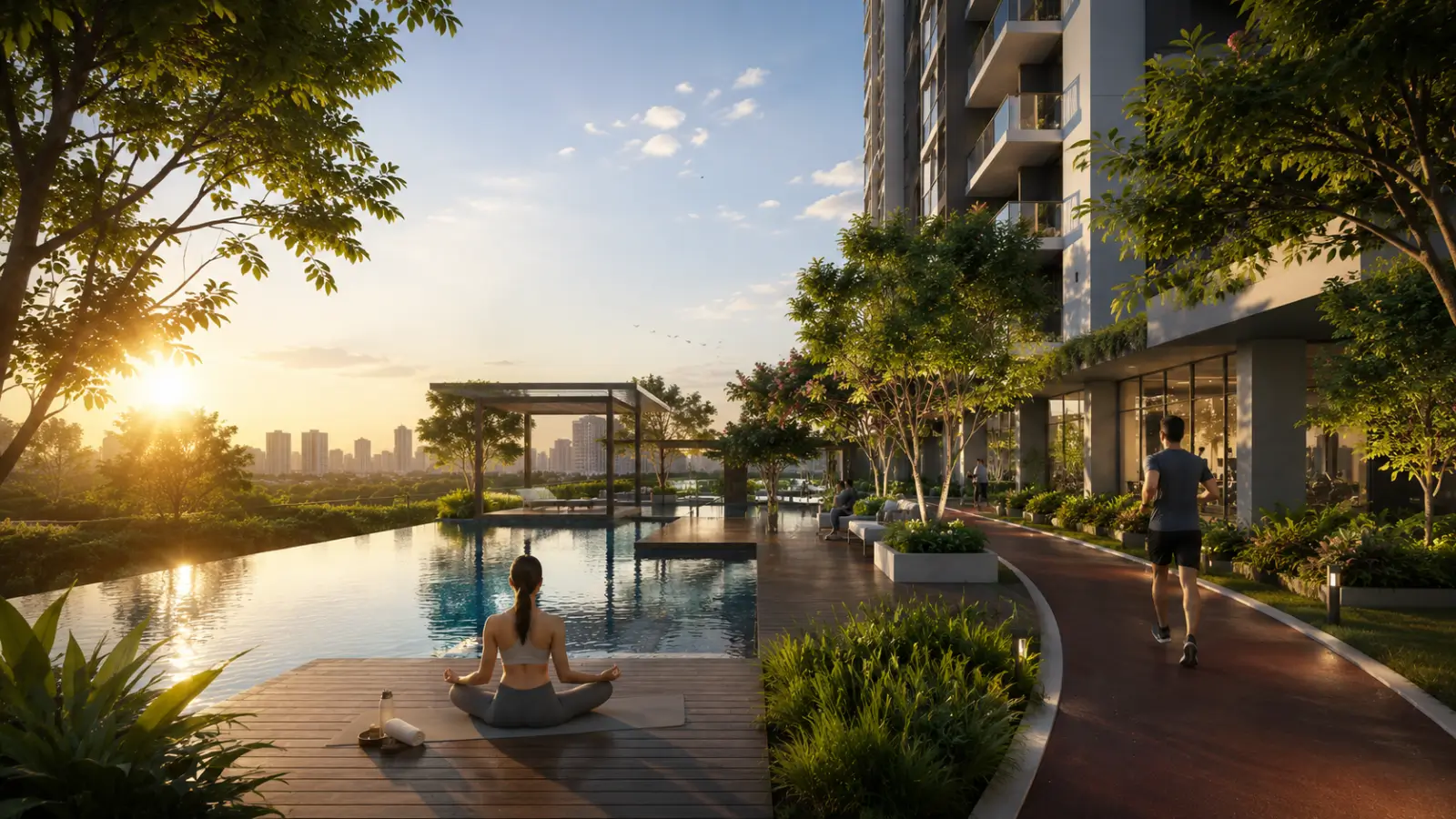
Buying land and building later looks cheaper on entry, and whether it actually is depends on four things buyers rarely price properly...
Buying a plot and building later looks cheaper at entry, and on this corridor plotted inventory has moved from roughly Rs 4,800 to Rs 9,500 per sq ft between 2021 and 2026. Whether that route actually costs less depends on four things buyers rarely price properly, and the answer differs by household rather than being universal.
Construction cost is the first and most underestimated. Building a home to the specification standard of a developed villa enclave means engaging an architect, a contractor and a project manager, then supervising for eighteen months to two years. Cost overruns on self-managed builds are common rather than exceptional, and the finished cost per square foot frequently lands closer to a developed villa than the plot price suggested.
Time is the second. A plot bought today produces a habitable home in perhaps two to three years, assuming approvals move smoothly. A developed villa at Embassy Riverine indicates phased handover from 2030, which is longer, but the difference narrows once construction time on the plot is counted honestly. Neither route is quick.
Community and infrastructure form the third difference, and it is structural. A plotted layout delivers roads, drainage and boundary, then leaves the streetscape to whatever individual owners build. A developed enclave delivers uniform architecture, a 40,000 sq ft clubhouse, 19 acres of reserved landscape and facility management from day one. Whether that uniformity appeals is genuinely a matter of preference.
Control is the fourth, and it is where plots win outright. Building your own home means every decision is yours: layout, specification, orientation, phasing of spend. A developed villa fixes the Embassy Riverine Villas built up area, the plan and the finish schedule, offering choice only across three configurations and two orientations. Households with strong design views often find that constraint frustrating.
For most buyers the deciding factor is bandwidth rather than economics. Supervising a build requires time, expertise and tolerance for dispute that many households do not have alongside demanding careers. Anyone weighing villa investment North Bangalore options should price their own hours honestly, then decide. A low density villa project in Bangalore transfers the execution risk to the developer, and that transfer is a large part of what the premium buys.
Related reading: the Embassy Riverine floor plan guide.
FAQs
Is buying a plot and building cheaper?
Not necessarily. Construction cost, architect and contractor fees, project management and overruns often bring the finished per-square-foot cost close to a developed villa, and self-managed builds overrun commonly rather than exceptionally.How do the timelines compare?
A plot produces a habitable home in roughly two to three years assuming approvals move smoothly. Embassy Riverine indicates phased handover from 2030, so the gap narrows once construction time on the plot is counted honestly.Where does a plot clearly win?
Control. Every decision on layout, specification, orientation and phasing of spend is yours, whereas a developed villa fixes the plan and finish schedule with choice only across configurations and orientation.
Related Articles
Embassy Riverine Villas vs MAIA The Seven: Which Bengaluru Suits You?
Embassy Riverine Villas vs MAIA The Seven: compare North and South Bengaluru luxury homes on location, size, price, density, approvals and possession.
Embassy Riverine Villas vs Century Immencity: Villa Land or Vertical Living?
Compare Embassy Riverine Villas vs Century Immencity on price, density, size, location, airport access, RERA status and possession.
Embassy Riverine Villas vs MAIA Mansion: Villa Enclave or Bespoke Mansion?
Embassy Riverine Villas vs MAIA Mansion: compare two North Bengaluru luxury communities on scale, density, home sizes, pricing, customisation and documentation.
Embassy Riverine Villas vs Embassy Greenshore: Villa Enclave or Lakefront Tower?
Embassy Riverine Villas vs Embassy Greenshore: compare two Embassy township projects on villa versus apartment living, pricing, density, location, RERA and possession.