Why 4.4 Villas Per Acre Changes Daily Life at Embassy Riverine
Density is the one number on a master plan that cannot be renegotiated after handover, and at roughly 4.4 villas per acre it governs street width, setback...
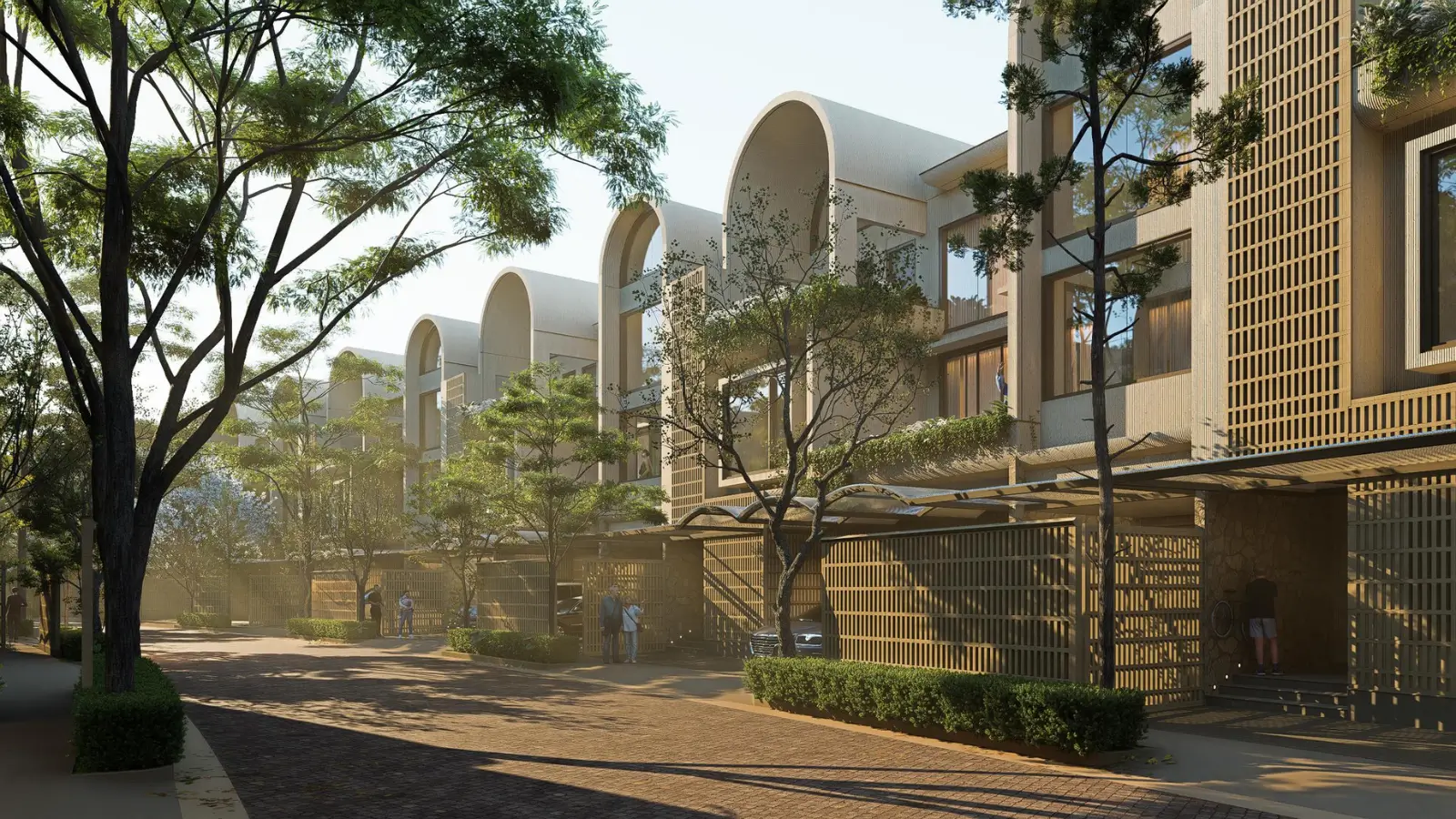
Density is the one number on a master plan that cannot be renegotiated after handover. You can replace a kitchen, repaint a facade or refit a bathroom during ownership, but you cannot widen the street outside your gate or move the house next door further away. Embassy Riverine places 218 homes across 50 acres, which works out near 4.4 villas per acre, and that single figure governs more of the daily experience than any specification line.
Market context makes the figure meaningful. A conventional luxury villa colony in this city runs between eight and ten homes per acre, so this parcel sits at roughly half that. Anyone asking how many villas per acre in a low density project genuinely counts as low should use eight as the reference point rather than an abstract ideal. Below five is uncommon; below four begins to look like an estate rather than a colony.
Consequences show up in unremarkable moments rather than dramatic ones. Wider internal streets mean two cars pass without one mounting the kerb. Deeper front and side setbacks mean a first-floor window does not look directly into a neighbour's bedroom. Real distance between structures means a conversation in one garden does not carry into the next. None of these features appear in a brochure highlight, and all of them are noticed daily for decades.
Canopy is the slower dividend and the one buyers most consistently underrate. Trees need soil volume, not just planting pits, and a compressed layout leaves neither the ground area nor the root run for anything to reach maturity. At this density there is genuine soil area for planting to develop across 15 to 20 years, which is why low-density enclaves photograph better at year fifteen than at handover while dense ones photograph worse.
A useful comparison sharpens the trade. Embassy Boulevard in Yelahanka runs lower still at roughly three villas per acre, but across 51 acres holding 170 homes as a standalone colony. The 218 villas low density layout here accepts a marginally higher density in exchange for sitting inside a 200-acre mixed-use township, which brings a 40,000 sft clubhouse, 19 acres of reserved landscape and a Grade A workspace precinct to the same address. That is a genuine trade rather than a deficiency, and which side of it suits you depends on whether you value township depth or absolute seclusion.
Two things to verify rather than accept. First, confirm the density arithmetic yourself: parcel area divided by unit count, using the sanctioned plan once Karnataka RERA registration completes rather than the marketing drawing. Second, walk the parcel and stand where your plot would sit, because a figure on paper and a street in front of you are different kinds of information, and the second is the one you will live with.
Related reading: the Embassy Riverine master plan guide.
FAQs
What is the density at Embassy Riverine?
Two hundred and eighteen villas across 50 acres, working out to approximately 4.4 homes per acre. A conventional luxury villa colony in this city typically runs between eight and ten per acre.Why does density matter more than specification?
Because it cannot be changed after handover. Density sets street width, setback depth, distance between structures and the soil area available for a mature canopy, whereas finishes and fittings can be replaced during ownership.How does this compare with Embassy Boulevard?
Embassy Boulevard in Yelahanka runs lower at roughly three villas per acre, but as a standalone colony of 170 homes across 51 acres. Embassy Riverine accepts marginally higher density in exchange for sitting inside a 200-acre township with a 40,000 sft clubhouse and 19 acres of reserved landscape.
Related Articles
Embassy Riverine Villas vs MAIA The Seven: Which Bengaluru Suits You?
Embassy Riverine Villas vs MAIA The Seven: compare North and South Bengaluru luxury homes on location, size, price, density, approvals and possession.
Embassy Riverine Villas vs Century Immencity: Villa Land or Vertical Living?
Compare Embassy Riverine Villas vs Century Immencity on price, density, size, location, airport access, RERA status and possession.
Embassy Riverine Villas vs MAIA Mansion: Villa Enclave or Bespoke Mansion?
Embassy Riverine Villas vs MAIA Mansion: compare two North Bengaluru luxury communities on scale, density, home sizes, pricing, customisation and documentation.
Embassy Riverine Villas vs Embassy Greenshore: Villa Enclave or Lakefront Tower?
Embassy Riverine Villas vs Embassy Greenshore: compare two Embassy township projects on villa versus apartment living, pricing, density, location, RERA and possession.